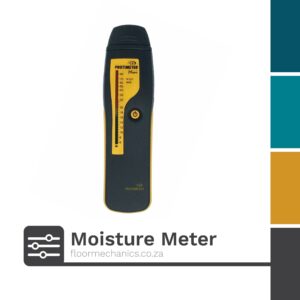
When it comes to a successful glue down vinyl flooring installation, the single most important factor is what lies beneath the surface. No matter how perfectly you cut, fit, and lay the vinyl, if the substrate is holding excess moisture, you risk adhesive failure, bubbling, cupping, and even long-term damage to the floor. That’s why using a moisture meter to test your substrate is a non-negotiable step in the process.
Why You Need to Test Moisture Levels
Cement screeds, concrete, and other substrates naturally hold water as part of their curing process. If you install vinyl too soon, the adhesive can’t bond properly, leading to costly callbacks and unhappy clients. By using a moisture meter both before you screed and again before installing glue down vinyl flooring, you’ll know whether the floor is ready to proceed—or whether additional drying time or a moisture barrier is required.
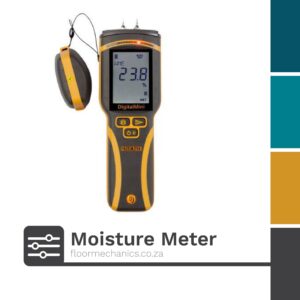
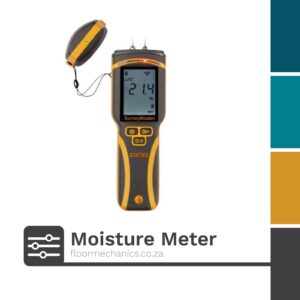
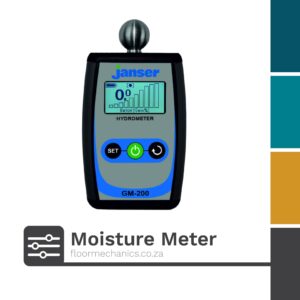
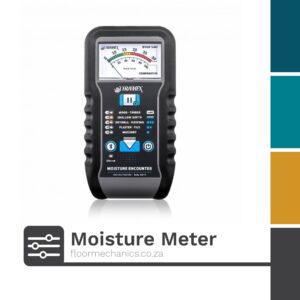
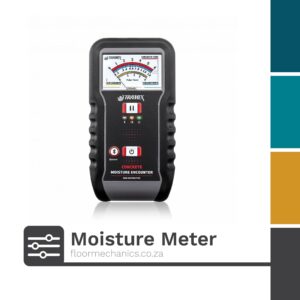
Main Types of Moisture Meters
There are two primary types of moisture meters commonly used in flooring projects:
- Surface (Non-Invasive) Moisture Meters
These use radio frequency or electrical impedance to measure moisture levels without damaging the surface. They’re quick, easy to use, and excellent for spot-checking large areas. - Invasive (Pin-Type) Moisture Meters
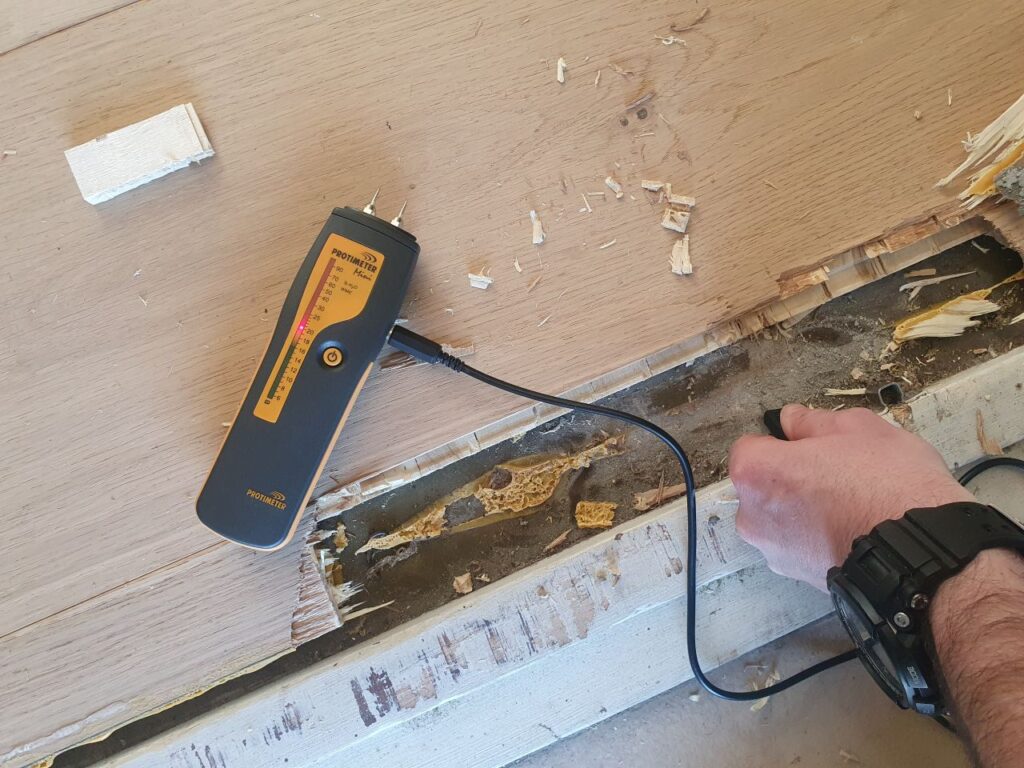
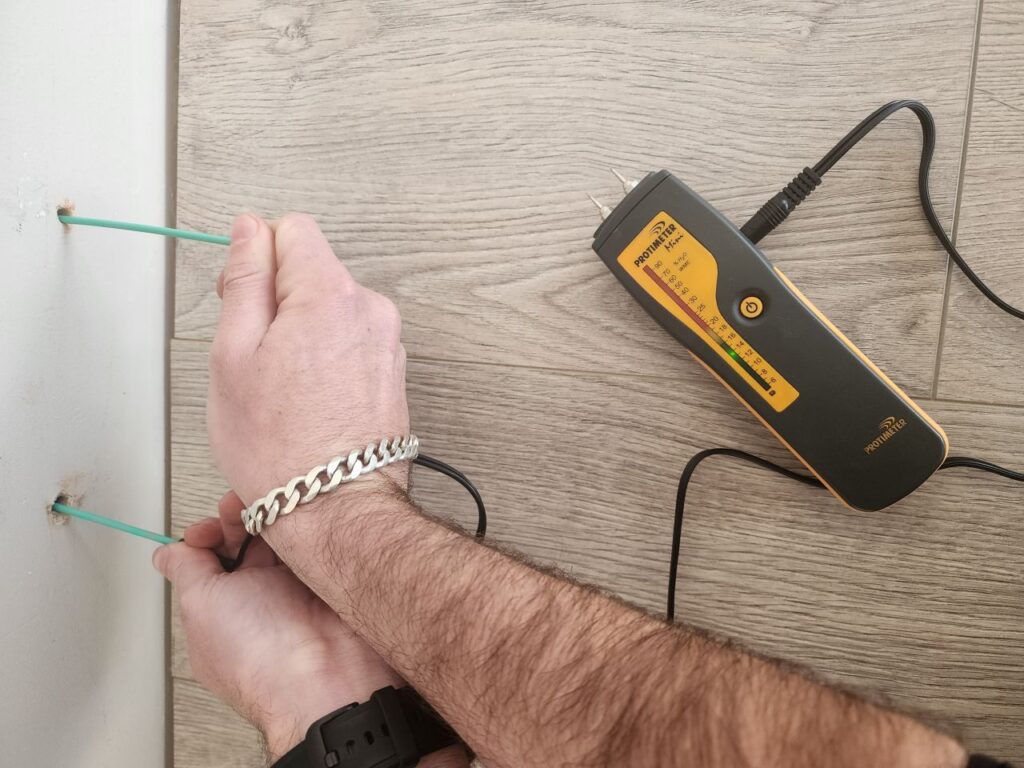
These penetrate the substrate with small pins to provide highly accurate moisture readings at specific points. They do leave tiny marks, and, as the reading is hyper-localised, it requires more extensive testing across the surface to gauge overall results. Pins are not to be confused with probes, which are an accessory for some moisture meters. To use probes, holes are drilled into the concrete so that the probes can assess moisture deeper within the slab for a more accurate measure.
A professional installer will often use both types to cross-check results.
What the Measurement Indicator Means
There are four main types of measurements derived from a moisture meter and which one you get depends on your device. Getting to grips with your instrument and how to interpret a reading is critical to working smart and fast.
- Wood Moisture Equivalent (WME)
Used by the pin-type (invasive) and some pinless meters and measures the moisture level in other materials (like screed or plaster) expressed as if they were wood. The scale is typically 0–30% WME, with 0-8% being dry, 8-15% being acceptable range for interior conditions, and upwards of that being too damp for most flooring adhesives. This reading is best for checking subfloors, timber substrates, or comparison readings on non-wood materials.
- Carbide Method Equivalent (CM%)
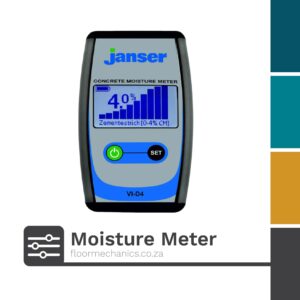
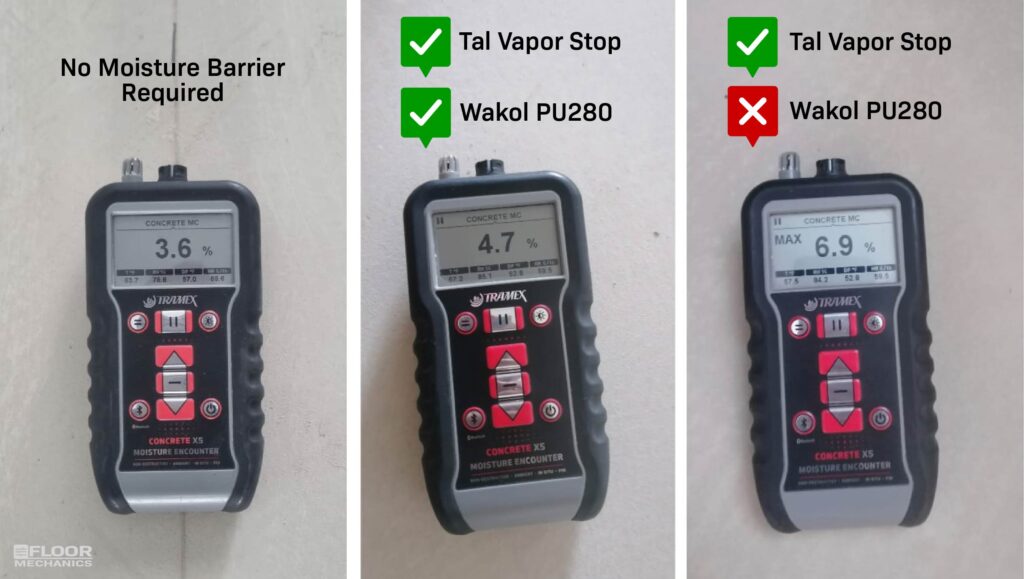
Commonly used in the flooring industry, especially in Europe and South Africa, for cement screeds and concrete, and measures the moisture content of a sample compared to results from the Carbide Method (the industry gold standard). Any result under 4% CM is good to go for screeding and glue down vinyl installation. This reading is best for glue down vinyl, engineered wood, and laminate installations over concrete or screed substrates.
- Relative Humidity (RH%)
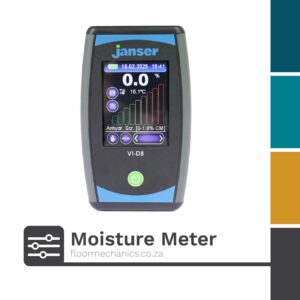
Used by in-situ probes and advanced digital moisture meters and measures the internal relative humidity of the substrate on a scale of 0–100% RH. Less than 75% RH is considered safe for most resilient flooring, with 75–90% RH being a borderline result that may need a moisture barrier, and above 90% being too wet for installation. This reading is best for concrete slabs and large commercial projects where precise monitoring is critical.
- Conductivity / Comparative Scales
Used by non-invasive (surface) meters and measures the electrical impedance or capacitance of the surface, giving a relative indication of moisture. The scale is usually a summary indicator such as 0-100, green–yellow–red zones, or “Dry / Damp / Wet”. It would get used to compare multiple areas to look for higher readings that signal a problem zone, and is useful for a rapid scan across large areas before more detailed testing.
In South Africa, most professional flooring installers and manufacturers refer to the Carbide Method Equivalent (CM%) scale when assessing substrate moisture levels. This method, also called the Calcium Carbide Test, is considered the most reliable for determining whether screeds and concrete slabs are dry enough for glue down vinyl flooring.
When using a digital moisture meter calibrated to CM%, you can take readings quickly on-site that correlate closely with the results of a formal carbide test. Always confirm that your readings fall within the manufacturer’s specifications before installation.
How to Use Your Moisture Meter for Accurate Results
- Calibrate and Check Your Device – Ensure your meter is set for the material you’re testing (e.g. concrete, screed, or wood).
- Test Multiple Points – Substrate moisture isn’t always uniform. Take readings across the entire area, especially near walls, corners, and expansion joints.
- Record Your Readings – Keep a log of all moisture readings, noting both date and location.
- Take Photographic Evidence – Always photograph your readings on the display of the moisture meter. This creates a reliable project record and protects both installer and client if disputes arise later.
- Follow Manufacturer Guidelines – Compare your results against the flooring and adhesive manufacturer’s recommended limits (e.g. CM%, relative humidity).
Why We Recommend the Tramex Encounter CMEX5
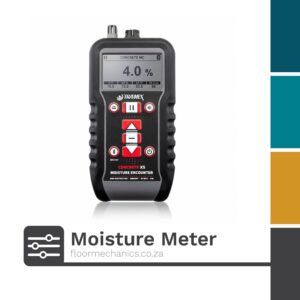
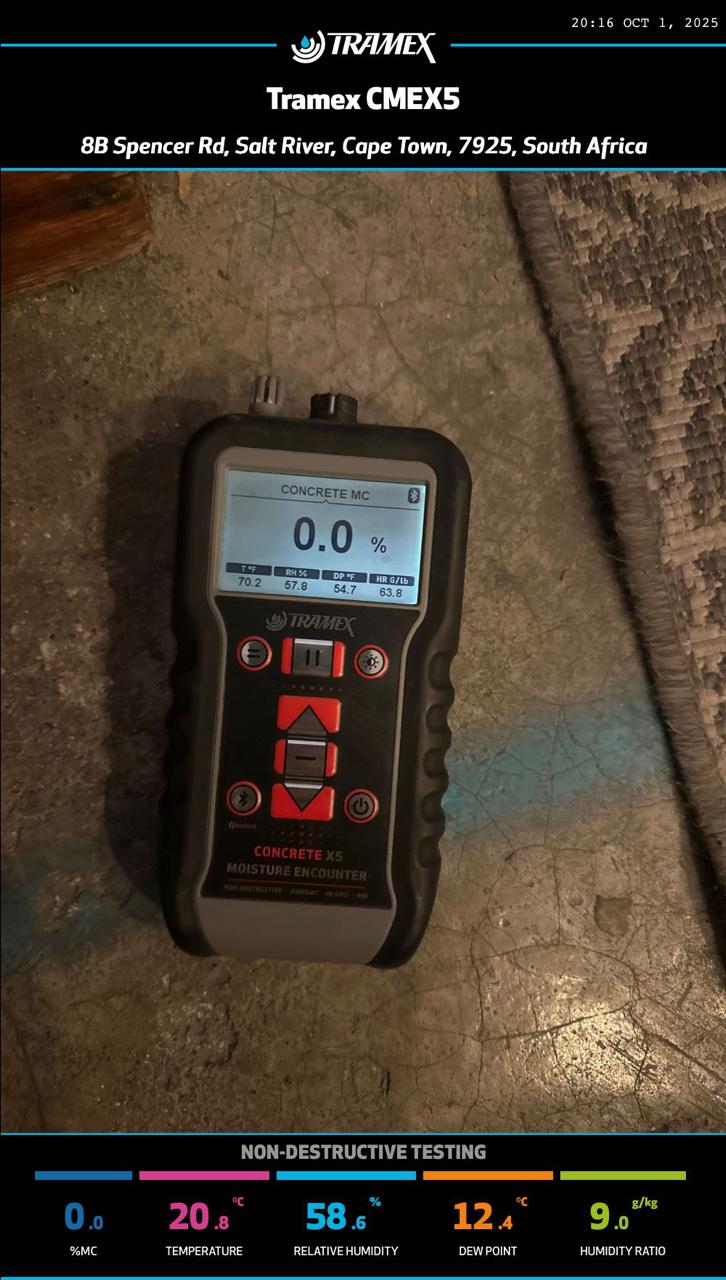 While there are many moisture meters available, many of which you can find on our website, our favourite option is the Tramex Encounter CMEX5.
The CMEX5 measures moisture content in concrete or screed without damaging the surface, so no drilling or cutting is required. This means you can test many points quickly and preserve the substrate integrity and is especially useful when you want to test before screeding or before vinyl installation. It gives quantitative moisture content readings for concrete floors/slabs (usually up to about 20 mm) using gravimetric test methods as the baseline. It also provides Carbide Method (CM) equivalent values for concrete and other cementitious flooring. This is important because many flooring/adhesive manufacturers reference CM% limits. Furthermore, it measures other factors such as comparative WME, ambient relative humidity, temperature, dew point, humidity ratio and can use plug-in RH probes (like the Hygro-i2) for in-situ relative humidity testing.
The meter reaches approximately 20 mm into the slab/screed. This gives a meaningful reading below the surface, which helps catch moisture that isn’t just superficial. Although bear in mind that you might miss moisture deeper below that layer, which could still be problematic in some installations.
It has a clear digital front-lit display (good visibility in low light), with a “Hold” function which lets you freeze the reading when visibility is difficult or when moving the meter. The spring-loaded contact pins or electrodes help ensure good contact even on slightly uneven concrete. The CMEX5 pairs via Bluetooth with the Tramex Meters App, enabling you to map, document, and share moisture test results, geo-tag readings, take photos, and save reports. This is a big plus for record keeping, quality assurance, and for showing clients or inspectors your data.
It works in accordance with ASTM F2659 (for moisture testing of concrete floor slabs). This is important for meeting expectations from manufacturers, flooring standards/guidelines, and for ensuring your readings are defensible.
The body is built to take some abuse, with durable housing, good ergonomics, and accessories available, such as handle extensions, carry pouches, and calibration check plates to make field work easier.
Protecting Your Flooring Investment
Moisture problems are one of the top reasons that glue down vinyl flooring fails. While investing in a quality moisture meter is pricey, it is a non-negotiable tool for glue down vinyl. By incorporating substrate moisture testing into your workflow, you safeguard your projects, avoid warranty issues, and give your customers peace of mind that their new floor will last for years.