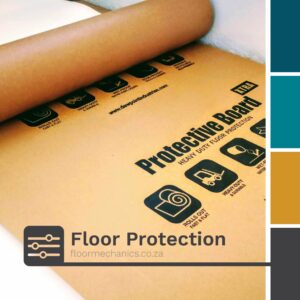
Why You REALLY Should Protect Your Floor with Protective Board After Installation
In an ideal world, flooring is the last trade to arrive on site. Once the walls are painted, ceilings completed, cabinetry fitted, and stonework done, the floors are installed to finish the space in pristine condition. But in reality, project timelines don’t always allow for this neat sequence. When deadlines are tight or other trades still need access after the floor is installed, protecting your investment with Protective Board is non-negotiable.
Welcome to Mayhem!
This week, our team experienced firsthand why this is so critical.
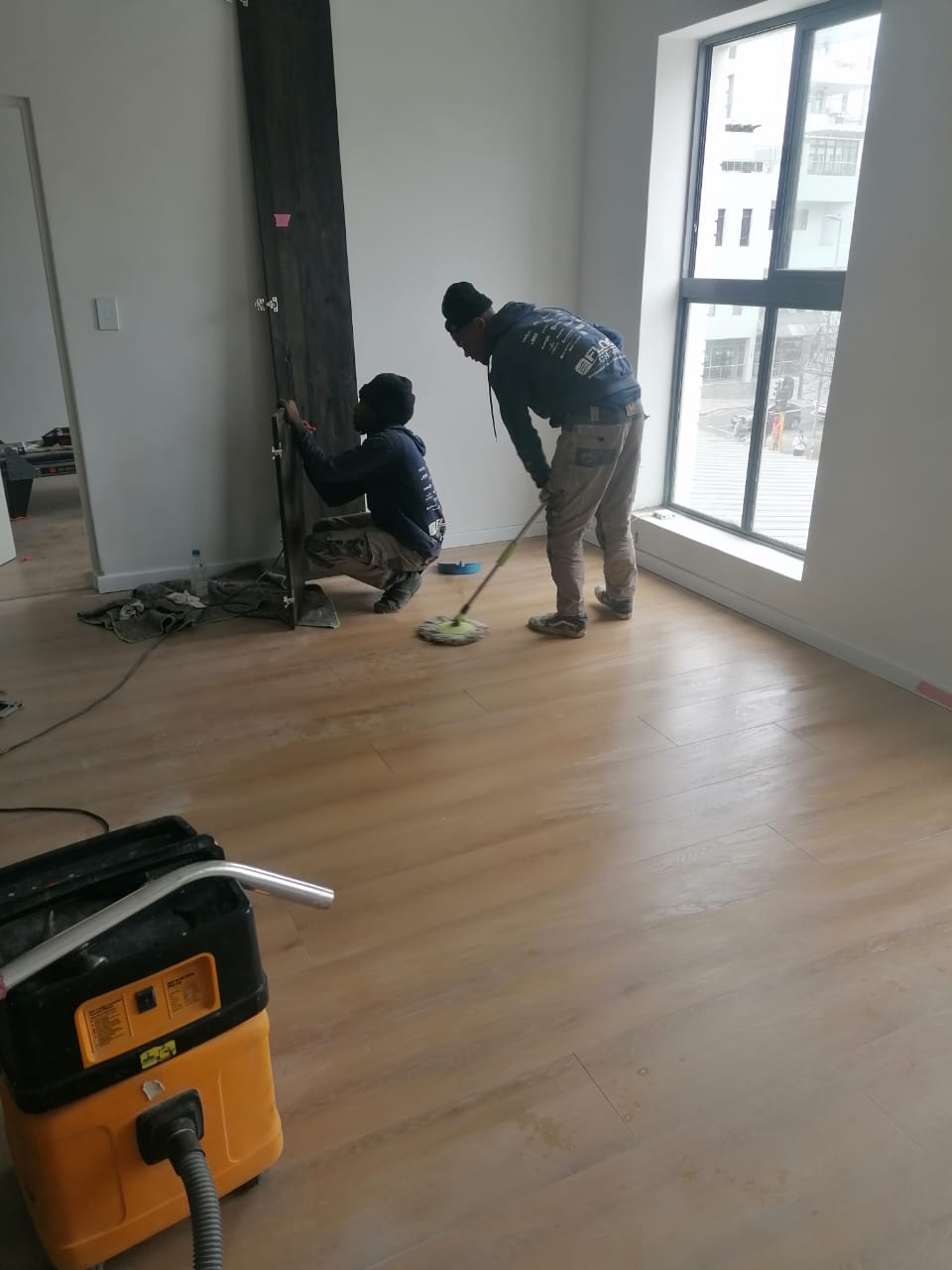
We completed a beautiful installation of Finfloor’s Black Forest Plus in the Wych Elm décor, accompanied by skirtings from Supreme Mouldings. Besides a few small trim details, the project was handed over complete and spotlessly clean—showcasing this beautiful laminate floor coupled with white skirtings throughout.
The next day, our installers returned to complete those few trim details… only to walk into mayhem.
A granite tops contractor had moved in and was doing wet works directly on the new laminate floor—water pooling across the surface, granite dust ground underfoot, footprints tracked through the home. You simply can’t believe professionals could treat a customer’s site this way. Check out this video of what we discovered.
Our team took charge, booting out the contractors and rapidly attending to deep cleaning that floor with a fine-toothed comb, looking for signs of damage. Given the terrible images you will see in the video taken of the site, you would be surprised to discover that our team could not identify immediate damage. Time may yet reveal if planks were comprised, but it must be said that the choice to invest in such a super laminate floor like Black Forest Plus saved the day. With its advanced scratch resistant and superior moisture rating, this floor looks as good as the day it went down.
Should any further damage present itself, the granite contractor will be responsible for the costs. More importantly, the customer’s project timeline will be delayed at a point when completion was already urgent. We see this time and time again.
To project managers and homeowners self-managing, we plea that if you have timeline issues, and other contractors are coming onto site after your floor is in, it’s a no-brainer to plan in Protective Board immediately after installation.
Why Protective Board Is Essential
- Shields from wet works – spills, adhesives, and grout can seep into joints and damage flooring.
- Prevents scratching – grit and dust tracked in by other trades can act like sandpaper.
- Absorbs impact – dropped tools and heavy equipment can dent or chip surfaces.
- Keeps your floor clean – reduces the time and cost of final cleaning before handover.
When contractors are still working on site, Protective Board is the difference between a stress-free finish and costly repair work.
Choosing the Right Protective Board
Protective Board comes in two main strengths to suit different site conditions:
- Heavy Duty – designed for general site protection against foot traffic, light tool work, and minor spills. Ideal for most residential and light commercial projects.
- Xtra Heavy Duty – a thicker, more robust option for sites where wet works, heavy equipment, or high contractor activity are expected. Offers maximum peace of mind when project sequencing can’t be controlled.
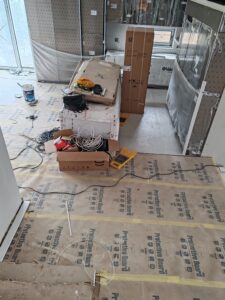
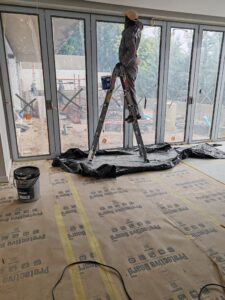
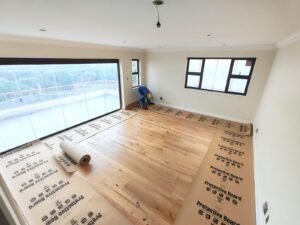
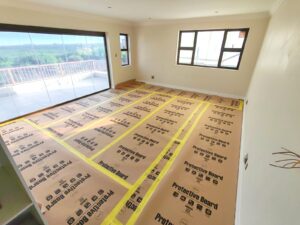
Given the story above, we strongly recommend Xtra Heavy Duty when stone, cabinetry, or wet trades are still to come after floor installation. A quick tip from Protective Board – as per images above – install your outer perimeter board first and secure using the special tape. Then fill in the rest line by line, using a broom to easily apply the tape to the seams. Just walk and fix. Easy peasy!
Protect Your Investment
Your new floor is a major investment—both financially and emotionally. Protecting it with the right Protective Board ensures that it stays flawless from installation through to final handover, no matter what other contractors may be doing around it.
Don’t let someone else’s negligence undo the time, money, and care you’ve put into your project. Build Protective Board into your project plan from the start.