

How a routine bedroom refresh revealed a major substrate preparation failure beneath a seemingly stable floor.
Project Overview
A client on the Atlantic Seaboard contacted us to update the bedrooms in her beachfront apartment. The existing combination of tiles and glue down vinyl flooring had served its purpose, and she wanted a fresh, modern herringbone vinyl design in the sleeping areas.
At first glance, the project seemed straightforward. Our site assessment—using a reverb stick, standard moisture checks, and a review of acoustic response—showed no immediate red flags. The existing vinyl appeared solidly installed. The main considerations were:
- Avoiding disturbance to the American shutters
- Ensuring level transitions between the vinyl and new bathroom tiles
- Preventing the need for unsightly transition trims
Everything suggested a simple uplift-and-install approach. Until the floor came up.
The Hidden Problem: A Topping that Lifted Like Vinyl
On arrival for the scheduled uplift, our team made an unexpected discovery. As soon as the first planks were removed, the entire 15–40 mm bonded topping lifted with them. The topping had completely delaminated from the underlying substrate—a serious structural red flag.
A closer inspection revealed the root cause. A previous installer had poured their topping directly over a bitumen-contaminated substrate without using a proper primer. The bitumen residue prevented adhesion, turning the entire topping layer into a floating sheet held together only by the vinyl above it.
What looked like a solid installation was one renovation away from failure.
-
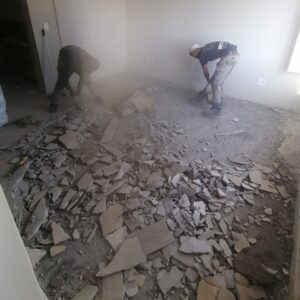
- Chopping out old topping.

-
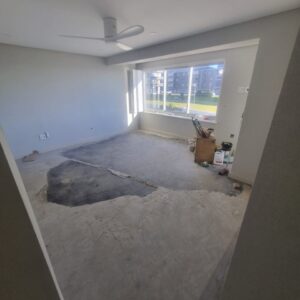
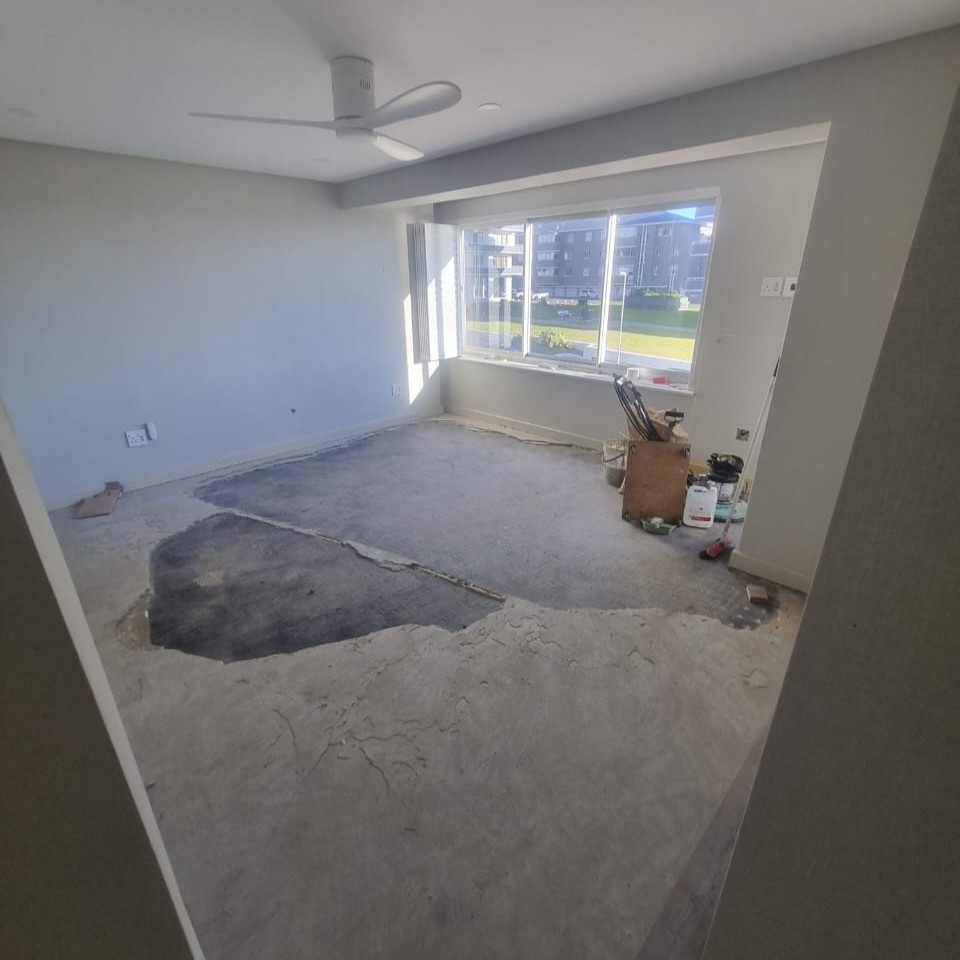
- Ready for new topping.
-
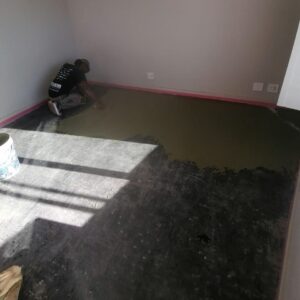
- Bitumen primer going down.
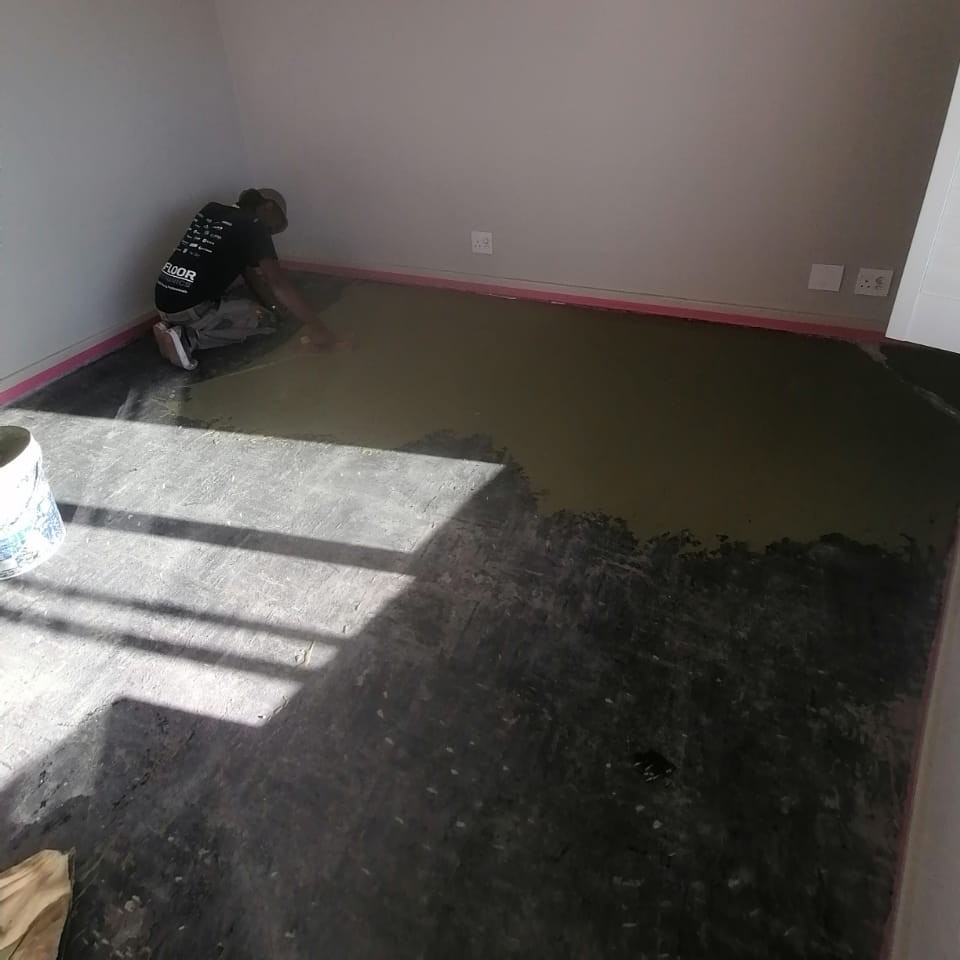
-
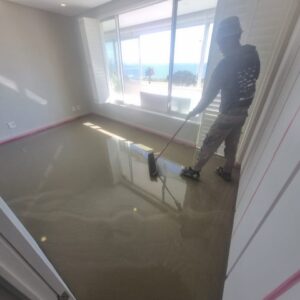
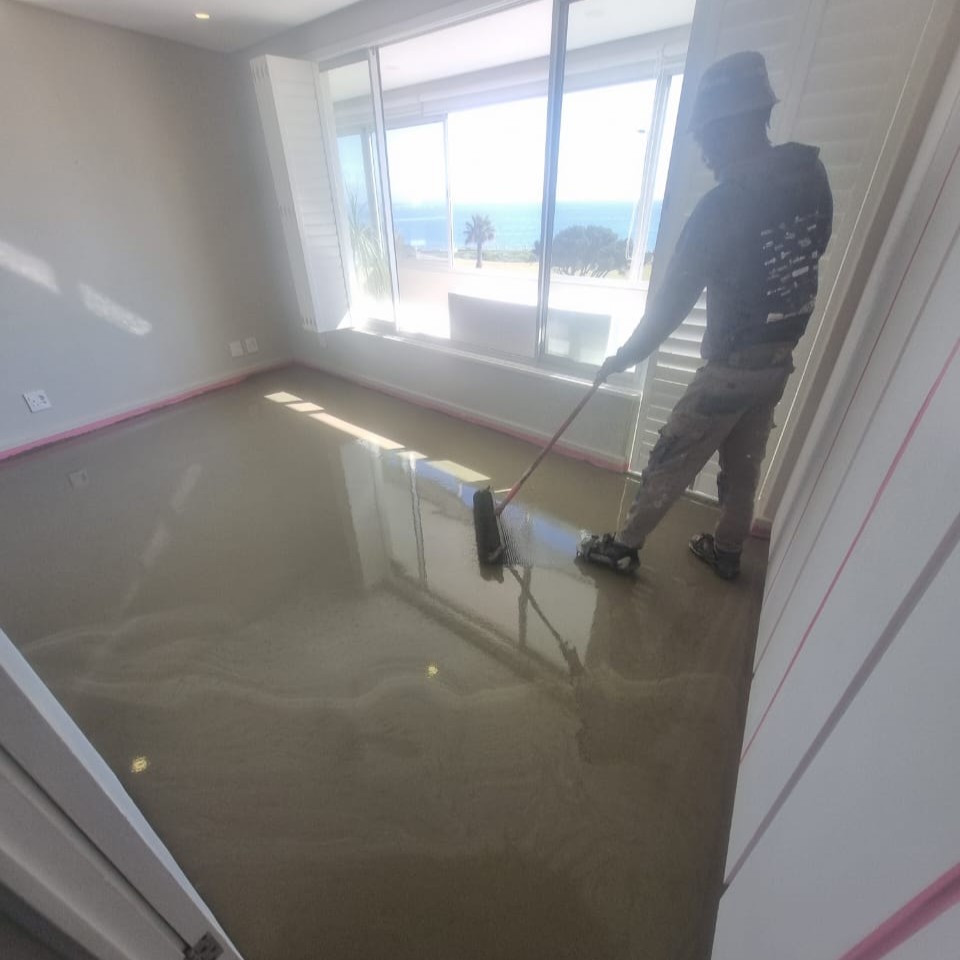
- Screeding at last.
Remediation: Correct Substrate Preparation from the Ground Up
To ensure a safe, durable installation of the new glue down vinyl flooring, we needed to rebuild the substrate correctly.
The team first uplifted the compromised topping across the full area, exposing a 35–40 mm height variance. All rubbery bitumen remnants were mechanically removed. We then applied a full bitumen-tolerant primer, tanking the entire slab to guarantee adhesion for the new topping.
A specialist contractor installed a new 40 mm sand-and-cement topping. This option gave structural integrity at a manageable cost and allowed the client sufficient time for proper curing.
Over the following days and weeks, we monitored moisture levels until the topping reached safe installation conditions. We then applied a high-grade self-levelling screed for a perfectly flat surface—essential for a flawless herringbone installation.
Only after completing the correct multi-stage substrate preparation did we proceed with the new glue down vinyl flooring.
The final installation was a success—flat, stable, and beautifully finished. However, the real victory was preventing a future flooring failure and protecting the client’s investment.
-
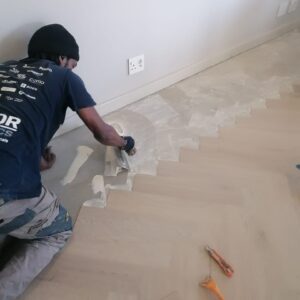
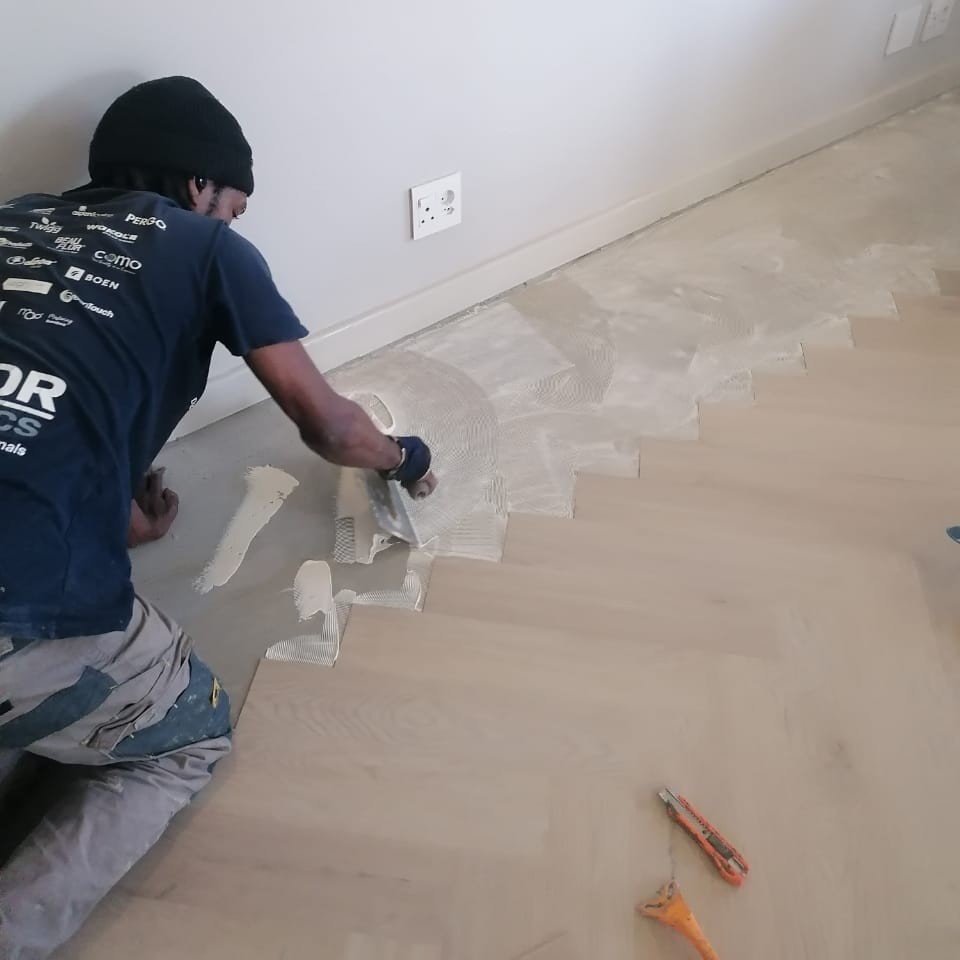
- Applying the adhesive.
-
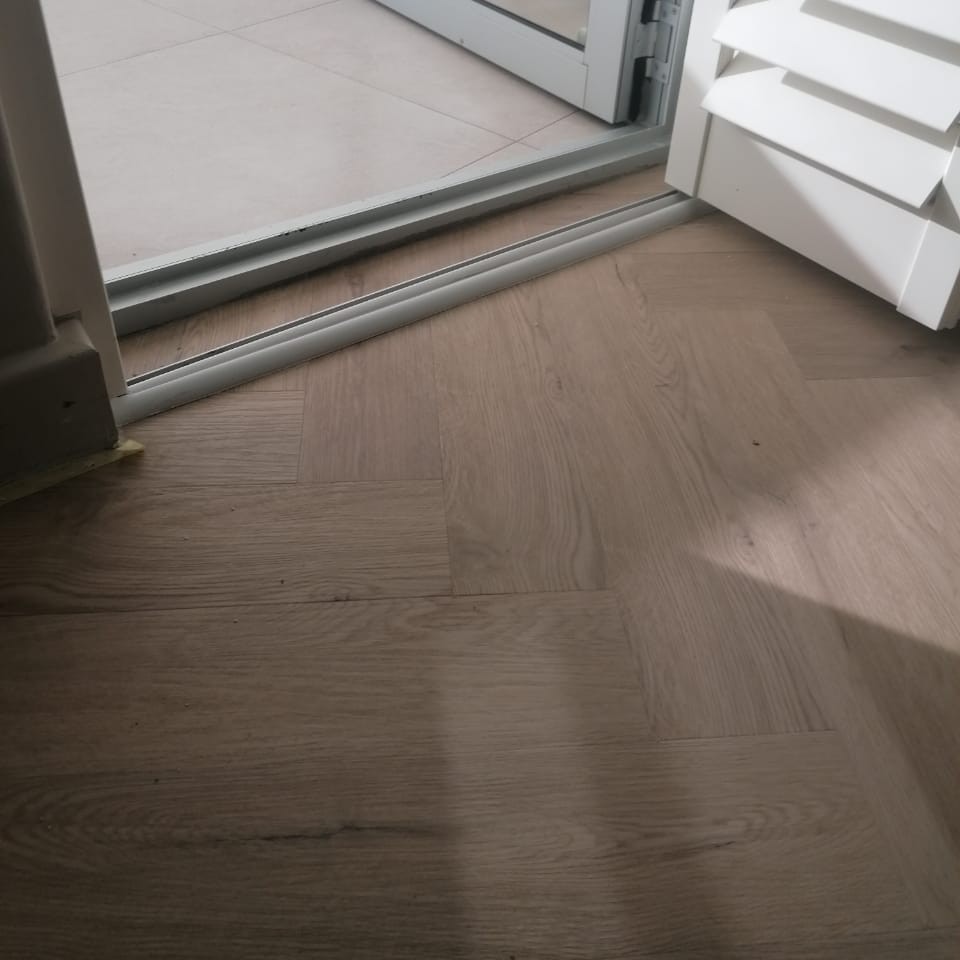
- Detailing the American Shutters.
-
- Finishing and cleaning.
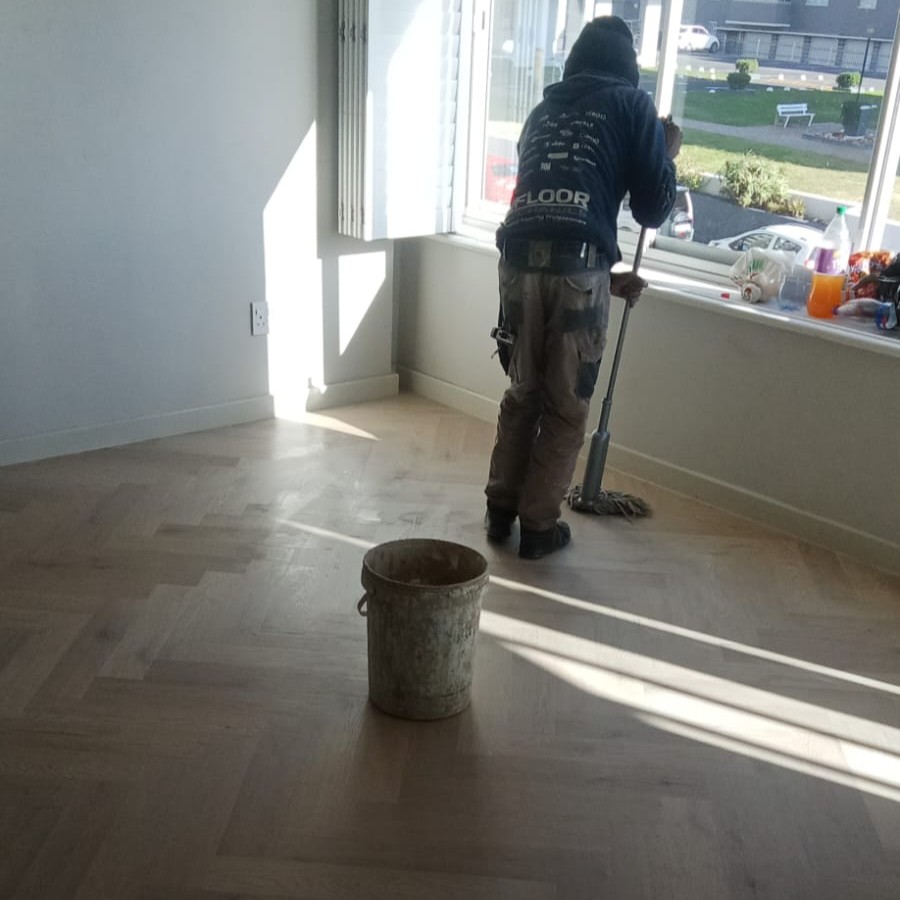
-
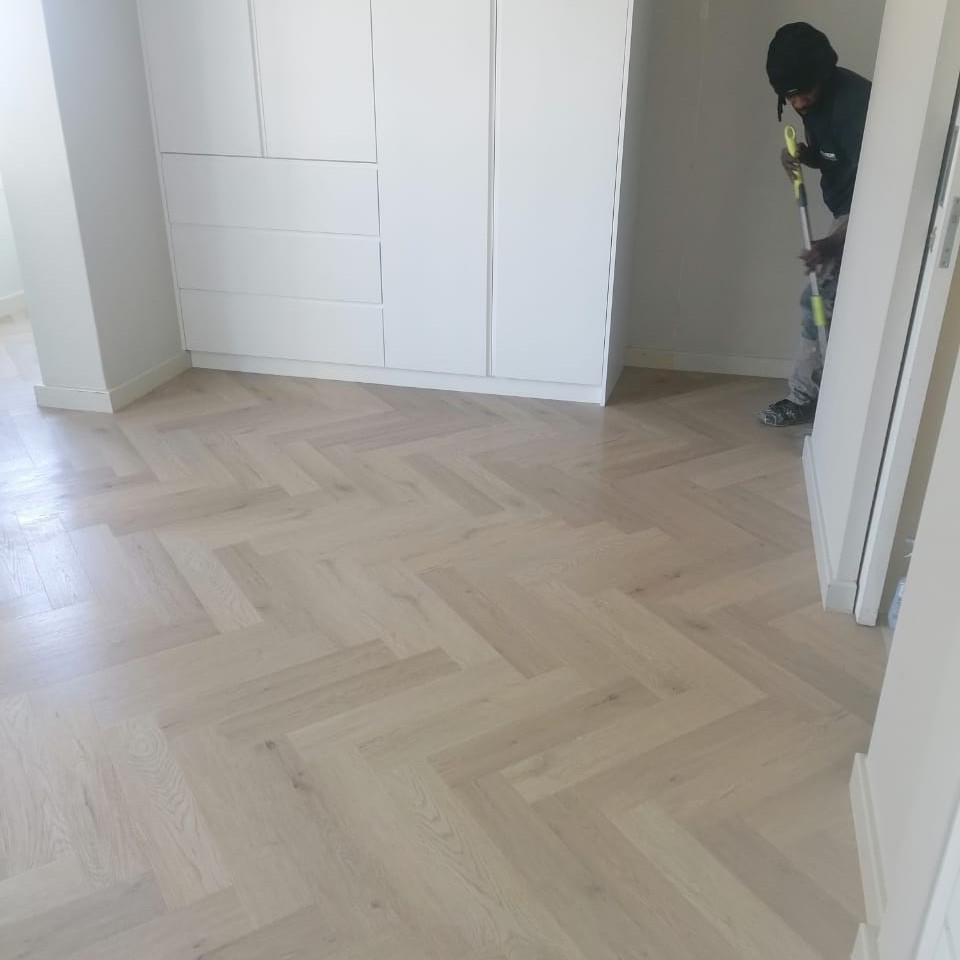
- Getting ready for handover.
Key Learnings: The Critical Importance of Substrate Preparation
This project reinforces several recurring truths about flooring renovations—especially in older buildings.
You can’t always detect delamination during a pre-quote inspection. A thick topping masked the hollow sound that normally signals a problem. Not all substrate issues are diagnosable before lifting the existing floor.
Renovations carry inherited risks. Many older apartments have multiple layers of “lipstick” flooring work. It sometimes takes peeling back three generations of renovations to reach a safe, stable substrate.
Poor substrate preparation always shows itself—eventually. Skipping primers over bitumen or compromised surfaces is a guaranteed future failure.
Clients must be warned about unknowns. Before lifting a single plank, it’s vital to prepare clients for the “wild cards” that come with renovation work—and to explain potential worst-case scenarios.
A flooring system is only as good as its preparation. Correct substrate preparation is the difference between a long-lasting installation and a costly redo.
Conclusion
This case study highlights why expert assessment and proper substrate preparation are non-negotiable in any glue down vinyl flooring project. A beautiful floor begins long before the first plank is laid—starting with what happens below the surface.
However, if your renovation involves existing flooring layers, especially in older buildings, prepare for the unexpected. The real issue could indeed be many layers down, and only discernible when fully interacted with during your project.